GoodWe GW10K-ET – Active Cooling Temperature Comparison
How does supplementary active cooling affect the operating temperature of a GoodWe GW10K-ET solar inverter? We have prepared a comparison of four graphs recorded under real operating conditions, showing inverter temperatures with and without active cooling.
Measurement Conditions
- Inverter: GoodWe GW10K-ET
- Installed solar panel capacity: 12 kWp
- Installation location: Room in a timber-frame building
- Room size: 9 m² (31.5 m³)
- With active cooling: 13 March 2024, room temperature 16–18 °C
- Without active cooling: 9 April 2024, room temperature 18–20 °C
GoodWe GW10K-ET With Active Cooling
1. Inverter Electronics Temperature (temperature_air)
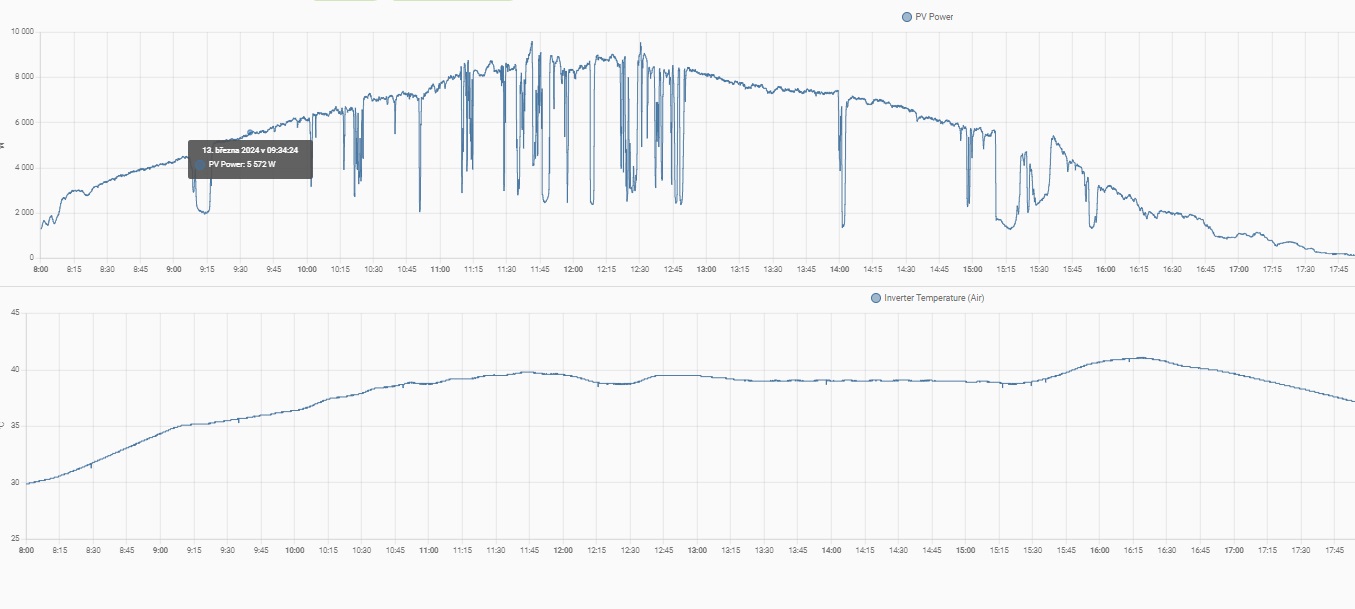
The first graph shows the inverter operating with supplementary active cooling installed on 13 March 2024. The upper section shows the photovoltaic system's power output, which was occasionally affected by cloud cover.
The lower section shows temperature_air, the temperature measured by a sensor near the inverter's internal electronics. This value can be monitored in the SEMS portal or the SolarGo app.
2. Inverter Heatsink Temperature (temperature_radiator)
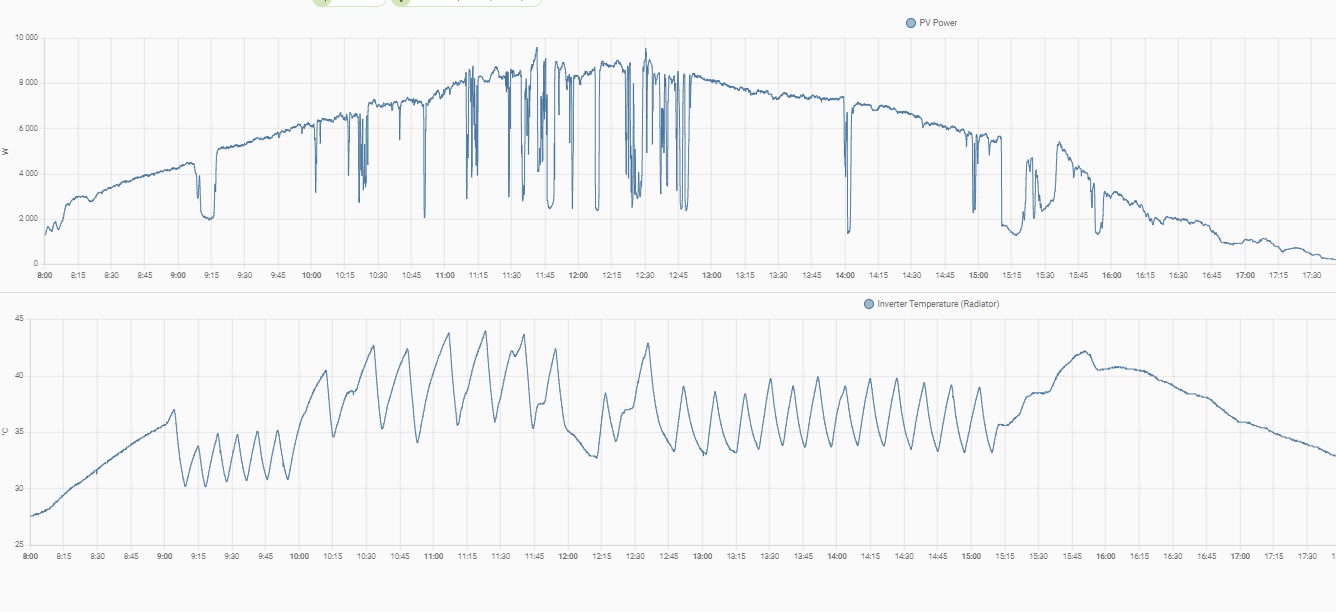
The second graph was recorded on the same day and shows the inverter heatsink temperature, identified as temperature_radiator.
The graph shows the active cooling system switching on and off during operation. The cooling system switches off when its own temperature sensor reaches approximately 35 °C.
The temperature measured by the cooling system's sensor may differ slightly from the temperature_radiator value recorded by the inverter. The temperature_radiator reading may also not be readily available in the manufacturer's monitoring applications.
GoodWe GW10K-ET Without Active Cooling
3. Inverter Electronics Temperature Without Cooling
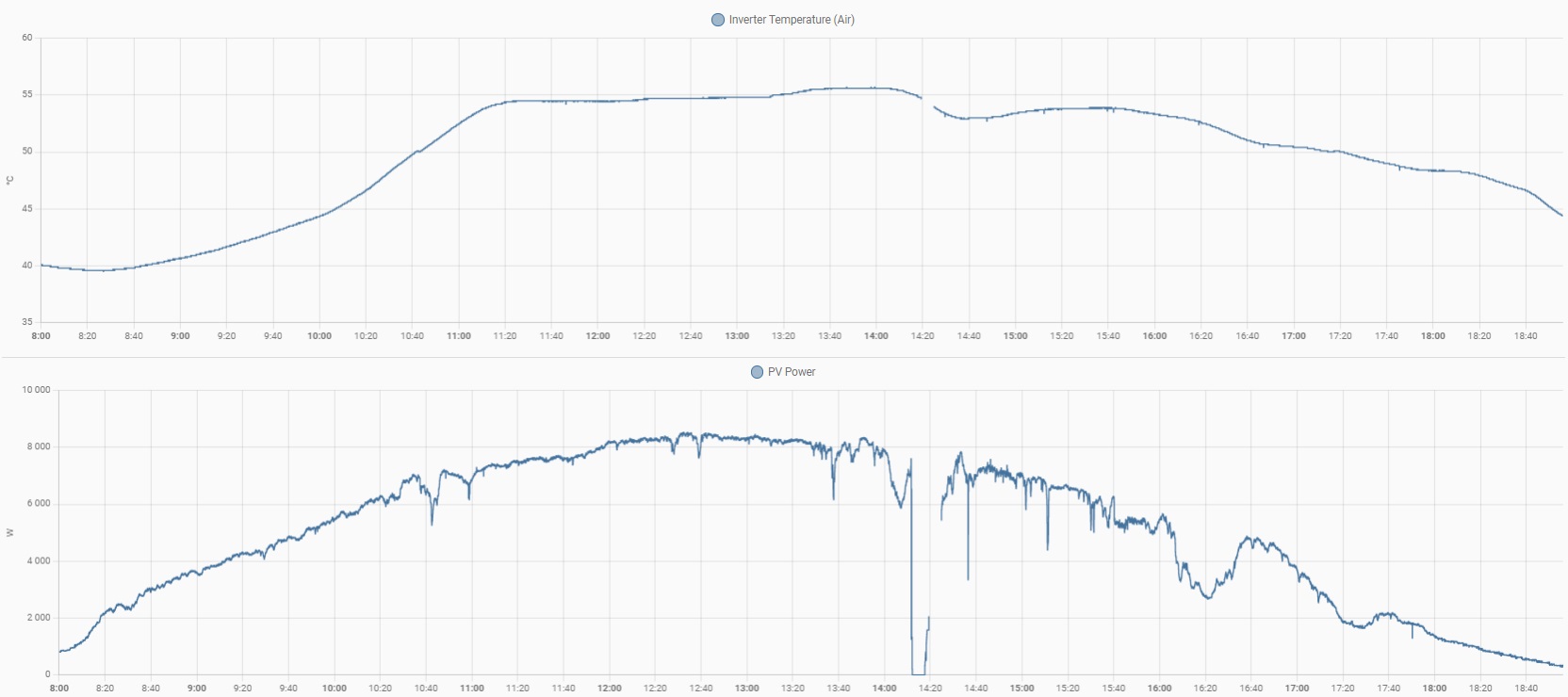
The next measurement was recorded on 9 April 2024, without supplementary active cooling. The room temperature was approximately 18–20 °C.
The upper section of the graph shows the inverter electronics temperature (temperature_air), while the lower section shows the photovoltaic system's power output.
At approximately 2:20 PM, electricity export to the grid was limited to 0 W as part of the experiment. This change should be taken into account when interpreting the graph.
4. Electronics and Heatsink Temperatures Without Cooling
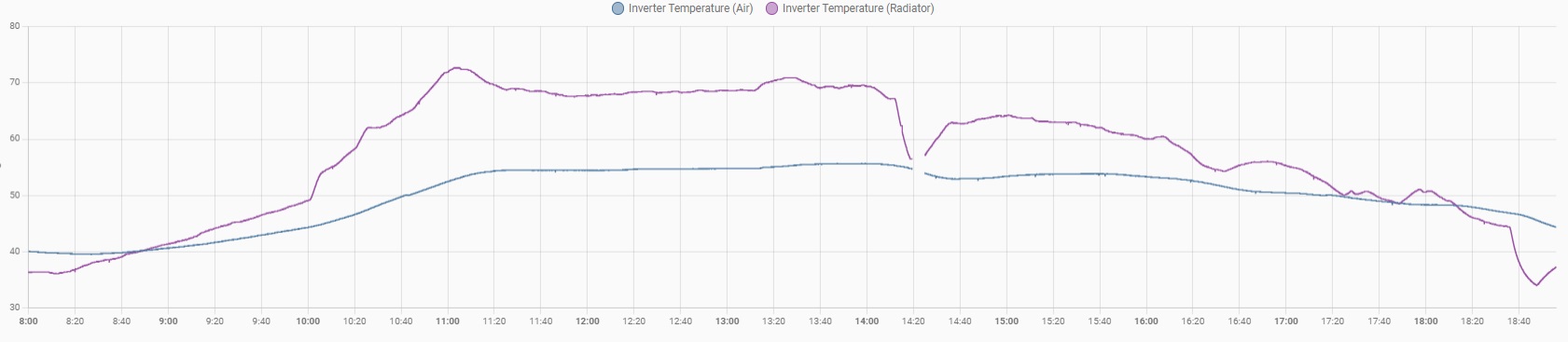
The final graph shows both internally measured inverter temperatures over the same period: temperature_air and temperature_radiator.
Without supplementary active cooling, the inverter heatsink temperature rose to slightly above 70 °C. The temperature measured near the internal electronics exceeded 55 °C.
What Do the Temperature Measurements Show?
These graphs document different operating temperatures of the GoodWe GW10K-ET solar inverter when running with and without supplementary active cooling.
Without active cooling, the inverter heatsink temperature exceeded 70 °C, while the electronics temperature rose above 55 °C. The measurements taken with active cooling show ongoing heat dissipation and the cooling fans switching on and off in response to temperature.
Important: These measurements were recorded on two different days under different operating and ambient conditions. They do not represent a controlled laboratory comparison under identical conditions. Actual inverter temperatures depend on operating load, ambient temperature, airflow and other factors.
Active Cooling for GoodWe ET and ET Plus+ Inverters
Looking for a way to help reduce the operating temperature of your GoodWe GW10K-ET inverter? Explore our supplementary active cooling solution designed for compatible GoodWe ET and ET Plus+ models.